
Unraveling the Islamic Republic’s Quarter Century Quest for Spherical Implosion
Was Fast16 the malware that struck at the core of the Islamic Republic’s implosion type nuclear weapons program, beyond what Stuxnet ever targeted?


On May 25, 2025, Brigadier General Fereydoun Abbasi Davani, a former head of the Atomic Energy Organization of Iran (AEOI) and head of the physics department at Imam Hossein University, an institution affiliated with the Islamic Revolutionary Guard Corps (IRGC), who was a key figure in the Islamic Republic of Iran’s nuclear weapons project, said in an interview with the Iranian outlet SNN:
A [nuclear] weapon has two components: it requires a [fissile] material and a [detonation] technology. That means if you have the material, if you have uranium or plutonium, you mount the detonation technology onto it… We are almost a first tier country in the world when it comes to explosives. In electronics, we have our best talents. So we can create a spherically symmetric [implosion] explosion. If anyone doubts it, I am prepared to demonstrate a cylindrical [symmetric implosion] for them.
Less than three weeks later, in the early hours of June 13, an air-launched ballistic missile (ALBM), a Rampage, Sparrow, or a comparable standoff munition, was likely fired from somewhere near the Iraq-Iran border by an Israeli Air Force fighters, likely an F-15, toward the 13th floor of a 14 story tower in Mahallati Town, a residential area used by senior IRGC officials in north Tehran. The missile entered directly into Fereydoun Abbasi’s bedroom. His wife later said in an interview: “My husband was thrown from the 13th floor of the building by the blast wave and had fallen onto the street across from our home.”
The Significance of “Spherically Symmetric Explosion” in the Islamic Republic’s Nuclear Program
In an ordinary explosion, energy and pressure waves expand outward, driving surrounding material away from the center of the blast. But in the design of a class of nuclear weapons, the objective is the reverse: conventional explosives, such as TNT or RDX, must act around a sphere of uranium or plutonium with such simultaneity and control that the pressure wave converges inward toward the center rather than dispersing asymmetrically. The issue, therefore, is not merely producing a powerful explosion; it is the engineering of geometry, timing, and pressure wave uniformity in an extremely precise design, with microsecond level accuracy. In the technical literature of nuclear weapons, the more precise term is spherical implosion wave: a wave that must travel from the periphery toward the center and compress the fissile material from all directions as simultaneously and uniformly as possible.
The purpose of this design is to create an implosion wave that is as spherical and symmetrical as possible. At the center of the design, weapon grade fissile uranium is uniformly compressed by this wave, much like any metal struck by a heavy impact, over an extremely short interval measured in a few millionths of a second. As compression increases, the density of the material increases, and with it the probability that neutrons will collide with fissile nuclei. If this process crosses the threshold required to sustain a chain reaction, the system enters a supercritical state and a sudden release of energy occurs: the bomb detonates. In an implosion type bomb, therefore, “spherical symmetry” is not merely a geometric feature; it is a necessary condition for bringing the fissile material into a state in which the chain reaction can propagate explosively.
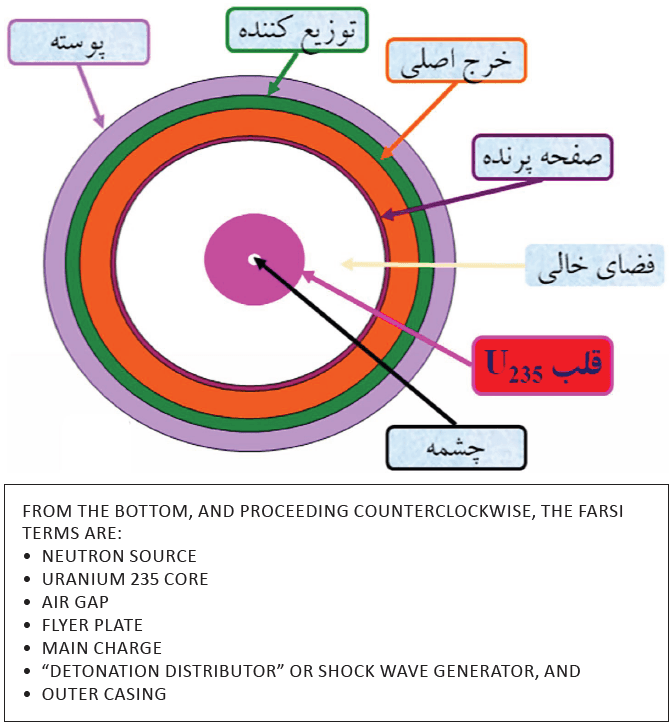
If this microsecond level precision is not maintained and the blast wave does not converge precisely at the center of the sphere, the uranium core will deform asymmetrically rather than being symmetrically compressed, and the system may never reach the threshold required to initiate and sustain a fission chain reaction.
Examining Two Types of Nuclear Fission Weapons: Gun Type Design and Implosion Design
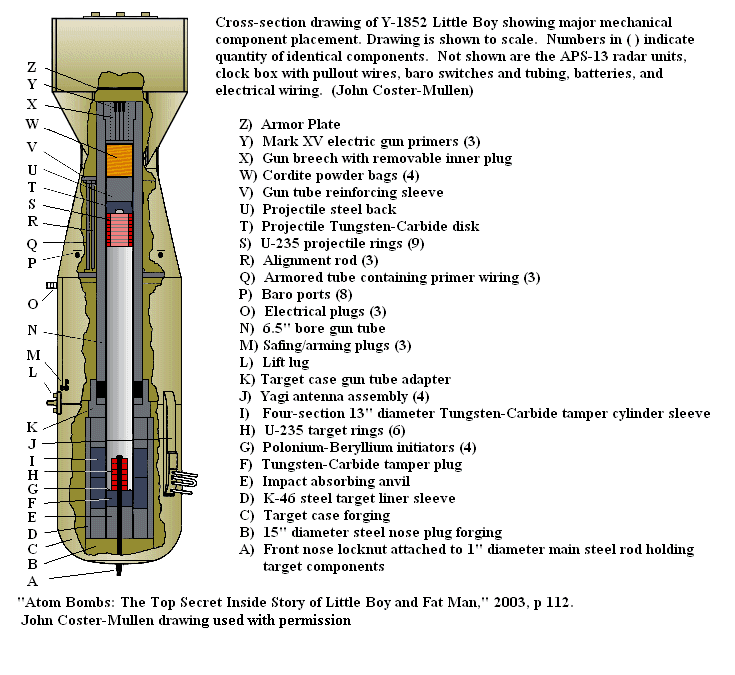
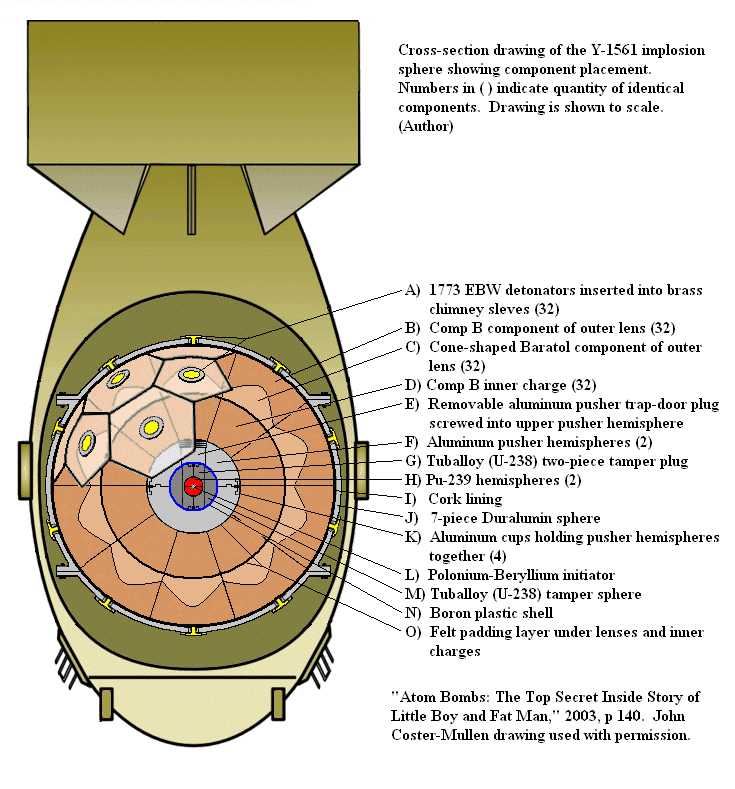
There are currently two different pathways for building a nuclear fission bomb: the gun type model, similar to the Hiroshima bomb, Little Boy, and the implosion model, similar to the Nagasaki bomb, Fat Man.
In the simpler and older gun type design, the fissile material, usually uranium, is divided into two parts and shaped into two hemispheres, or into cylindrical and conical forms. These two pieces are placed at opposite ends of a tube roughly one meter long, similar to an artillery barrel. When the bomb is released and reaches the appropriate point, conventional explosives detonate and cause the two uranium pieces to collide head on. Through compression, they reach the neutron density threshold required for a fission chain reaction and the detonation of the bomb.
The second pathway is implosion design, a more complex model in which the fissile material, usually plutonium, is symmetrically compressed at the center by a converging explosive wave. In this model, the issue is the precise and rapid compression of a central core. For this reason, implosion design requires a set of simultaneous capabilities: high explosives, precise detonators, a multipoint initiation system, hydrodynamic modeling, repeated testing, and accurate measurement of pressure wave behavior. This complexity is what makes “spherical implosion” one of the most difficult bottlenecks in bomb design. Possessing weapon grade uranium or plutonium alone is not sufficient; the material must be brought into a supercritical state at the correct time and in the correct geometry.
The nuclear archive documents show that the Islamic Republic was pursuing a miniaturized design that could be mounted on a missile, not merely a large, non transportable laboratory device. For this reason, it focused on an implosion design, which requires less fissile material than the gun type model but is more difficult to develop.
Abdul Qadeer Khan, the Amad Plan, and the Transfer of Design Knowledge
If the Islamic Republic’s uranium enrichment pathway has for years been associated with the AQ Khan Network, the father of Pakistan’s atomic bomb, the less visible part of this file is the transfer of knowledge and documents related to the manufacture of metallic components for a nuclear weapon. The Khan network was not merely a seller of centrifuge technology. It was connected to a pathway that passed through the conversion of uranium compounds into uranium metal, melting and casting, machining, and ultimately the production of hemispherical components. The significance of this issue is that a nuclear fission weapons program, after obtaining fissile material, needs the metallurgical capability to shape that material with precision. This is precisely the point at which “material” connects to “detonation technology.”
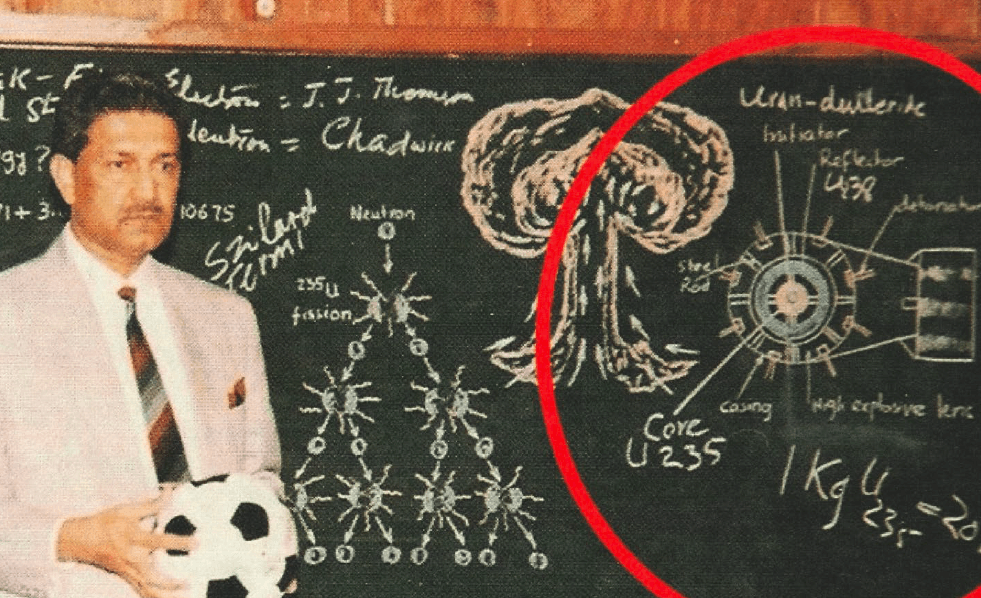
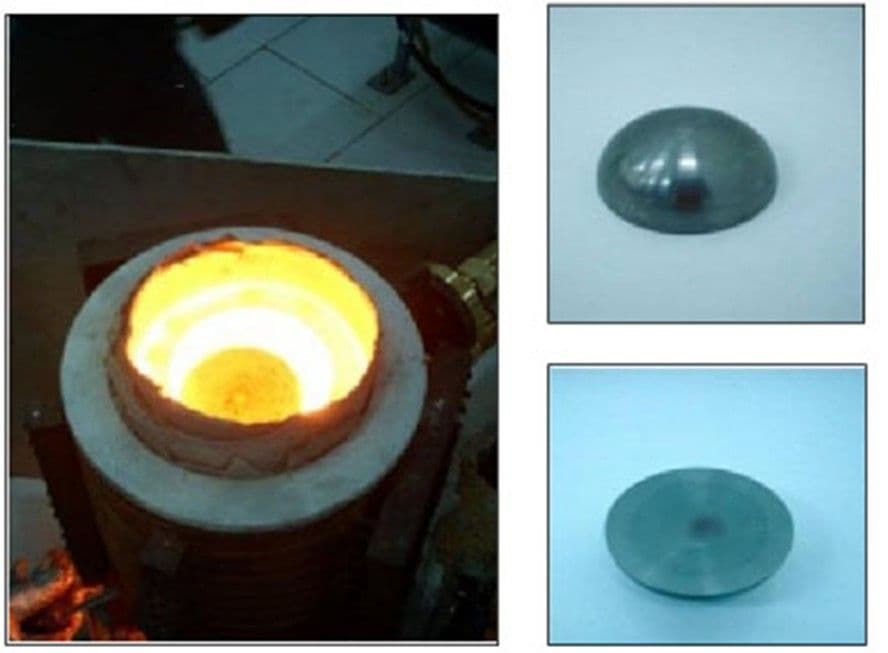
In the mid 2000s, in response to questions from the IAEA, the Islamic Republic provided a 15-page document that described the process of reducing uranium hexafluoride into uranium metal and then melting, casting, and machining uranium. This document had been received from Pakistan in the late 1980s or early 1990s, and Pakistani officials had also told the IAEA that a similar document existed in Pakistan. From the perspective of implosion bomb design, the most important part of this document was the section related to uranium machining.
In an implosion design, the fissile core must be manufactured with precision, with the proper geometry, controlled surface quality, and criticality safety. The Pakistani document, therefore, was a link connecting “material” to “detonation technology”: reaching a sphere or hemisphere that could be compressed by a spherical implosion wave. In this way, within the Defense Industries Organization, under the Ministry of Defense and Armed Forces Logistics of the Islamic Republic of Iran, and under the supervision of Mohsen Fakhrizadeh, a plan was laid out in the late 1990s that we now know was called the “Amad Plan.”
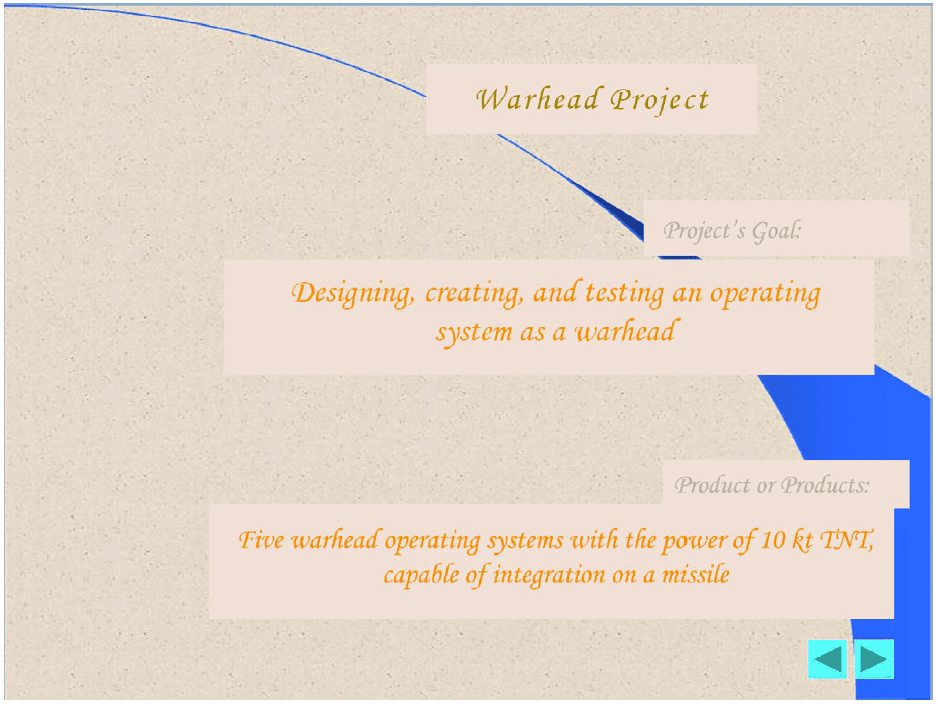
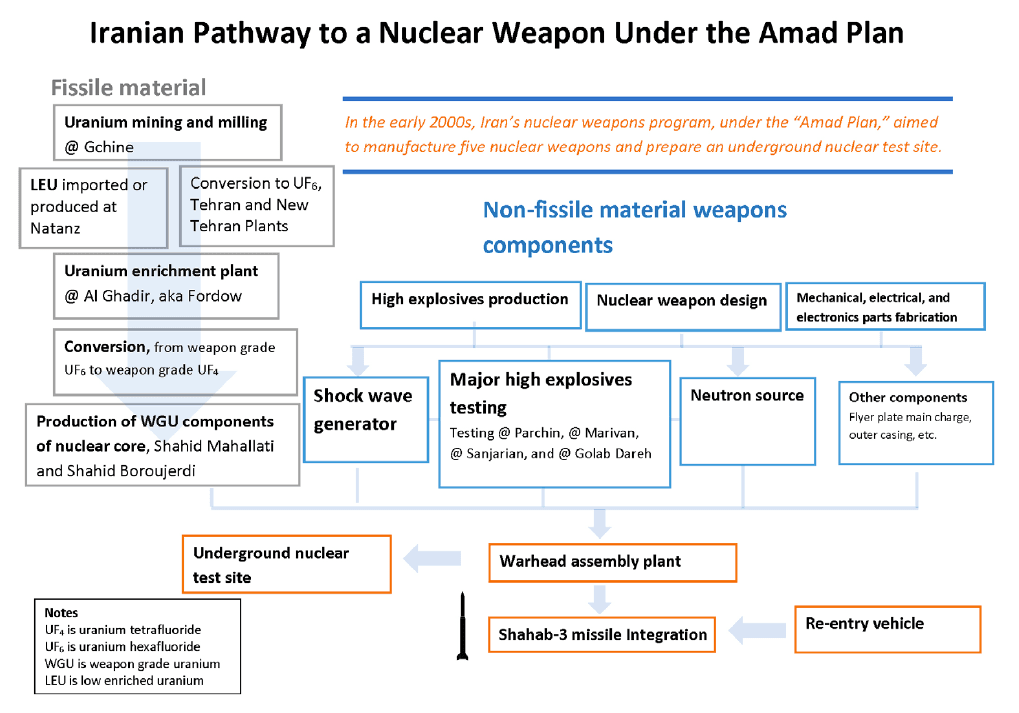
The Amad Plan was the framework that turned this scattered knowledge into an organized weapons program with three main pillars: the production of nuclear explosive material, the development and manufacture of a warhead, and its integration into a ballistic missile. Within this framework, design, testing, metallurgy, the neutron initiator, the shock wave system, and warhead integration into the re-entry vehicle were not separate projects. They were components of a single pathway toward producing a missile deliverable nuclear weapon.
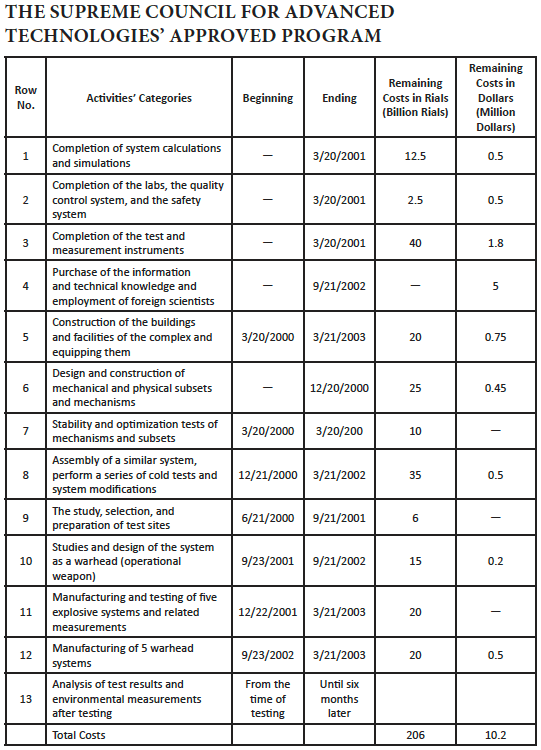
Despite receiving nuclear weapons designs from Pakistan and possibly elsewhere, the Islamic Republic did not copy them. Instead, it developed its own domestic capability to understand and design a miniaturized warhead, a capability that required computer codes, simulations, and experimental data. In this sense, the Amad Plan should be understood as the point of connection among three pathways: the fissile material pathway, the explosive design pathway, and the missile delivery pathway. The Khan network helped the Islamic Republic understand parts of the first and second pathways more quickly. But turning that knowledge into a deliverable warhead required far more than documents and centrifuges.
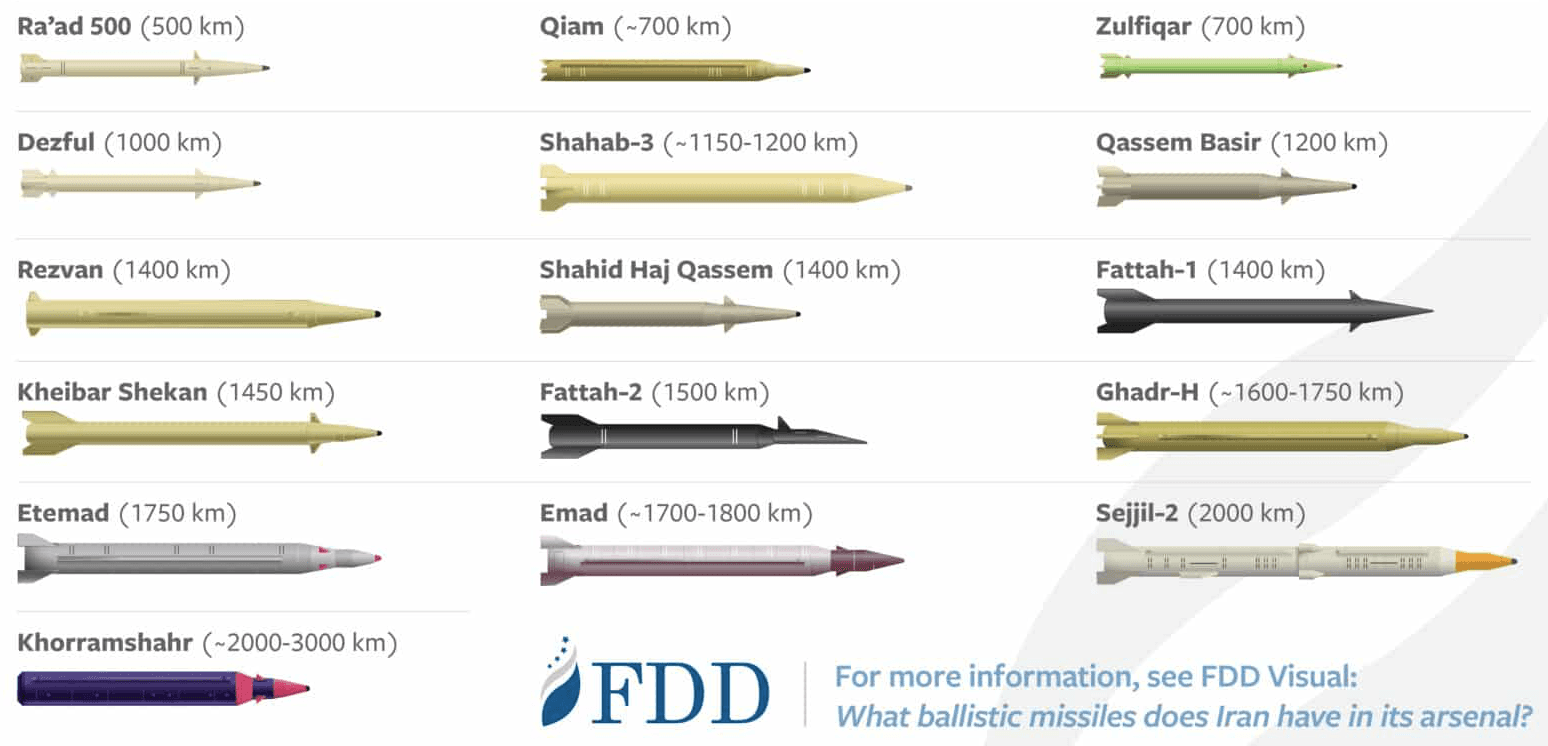
Shahab 3 Ballistic Missile and the Geometric Constraint of the Warhead
“Nuclear deterrence” is not achieved merely by possessing an explosive device; the holder of the bomb must also have the ability to deliver it to the target. At the beginning of the 2000s, and even today, the Islamic Republic of Iran’s air force relied mainly on a fleet rooted in the Shah’s purchases in the 1970s, and lacked a strategic bomber or a reliable air capability to carry a nuclear bomb to Israel. Under such conditions, the more practical path for the Islamic Republic was the development of ballistic missiles; a path that, based on the technology of the Soviet Scud family and then the transfer of technology from North Korea’s Nodong program, led to the formation of the Shahab-3 missile. That is why the West views the Islamic Republic’s nuclear program and medium range ballistic missile program as components of a single program.
- B. Taleblu, Arsenal; Assessing the Islamic Republic of Iran’s Ballistic Missile Program, FDD, Feb 2023, Download
- Iran’s Ballistic Missile Program, UANI, Jun 2023, Download
- R. Einhorn and V. H. Van Diepen, Constraining Iran’s Missile Capabilities, Brookings, Mar 2019, Download
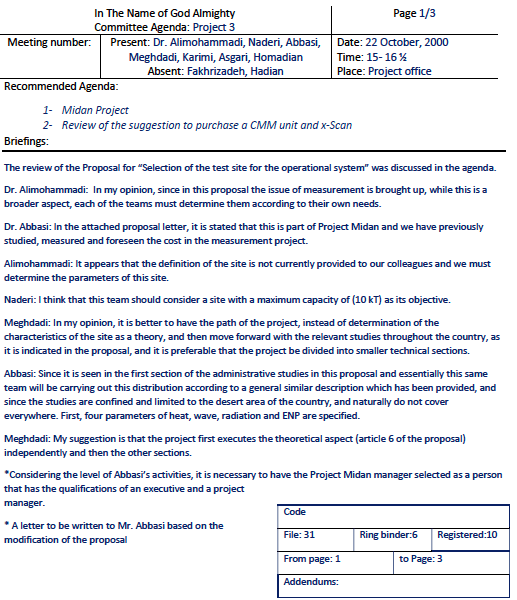
If the previous sections showed how “fissile material” and “detonation technology” were connected in the Amad Plan, Project 111 was launched to solve this problem: designing the explosive device as a warhead that could fit inside the re entry vehicle of a ballistic missile, fly, survive the severe mechanical and thermal stresses along the trajectory, and function at the appropriate time.
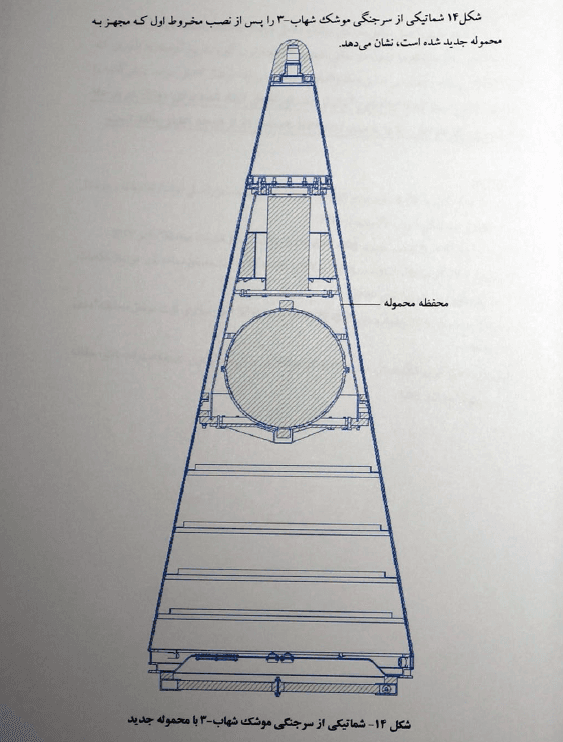
The complexity of Project 111 becomes clear from the fact that the issue was not merely “placing a sphere in the nose of the missile.” Six engineering groups worked under Project 111: structure and design, mechanism and design layout, fluids, heat, and aerodynamics, flight dynamics and control, structural analysis, and process and manufacturing planning. These groups produced a broad set of technical reports that constituted an important part of the military documents of the Islamic Republic’s nuclear program: instructions for assembling the chamber components, installing the payload inside the chamber, and attaching the chamber to the Shahab-3 warhead; a report on the design and construction of the detonation control system; instructions for assembling and operating the detonation control system; finite element simulation and transient dynamics analysis of the warhead structure; and implementing the mass property requirements of the Shahab-3 warhead with the new payload using a nonlinear optimization method. Project 111 stood at the boundary between weapon physics, missile engineering, flight dynamics, and activation mechanisms.
The important numerical issue in this section was the diameter constraint. The nuclear archive schematics, through dimensional analysis, yield a diameter of approximately 560 millimeters for the spherical space inside the warhead; a figure consistent with the roughly 550 millimeter outer diameter of the R265 system, or the final shock wave design in the Amad Plan. Both figures are smaller than the approximately 600 millimeter diameter available inside the Shahab-3 chamber.
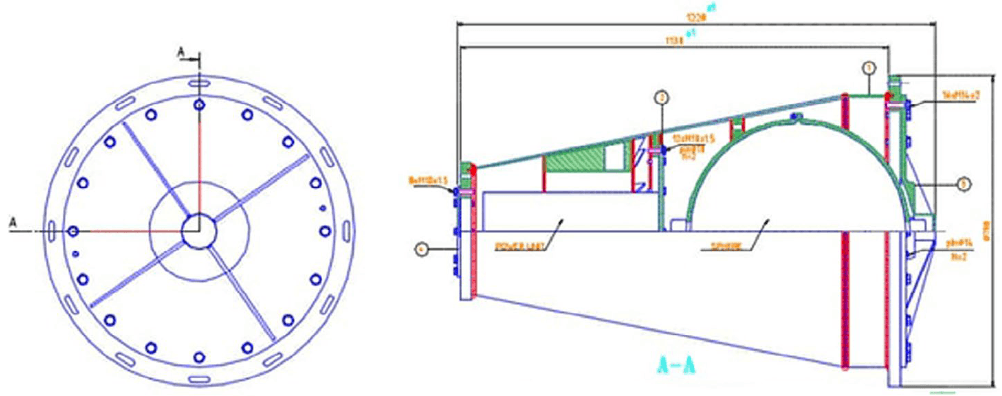
This geometric constraint is precisely where “spherical implosion” connects to the missile program. In a laboratory design, it might be possible to work with larger dimensions, greater weight, and a simpler configuration. But a missile warhead must fit inside a limited space, must not disrupt the missile’s mass balance, must survive the stresses of launch and ballistic flight, must remain stable during re entry into the atmosphere, and its arming and detonation system must function at the appropriate time. Therefore, the 55 to 56 centimeter diameter is not merely an engineering number; it is the bottleneck of nuclear design, miniaturization, the shock wave system, and spherically symmetric implosion.
The R265 designation in the Amad Plan referred to the inner radius of the shock wave system. Taking into account a shell approximately 10 millimeters thick, the outer radius of this system would be about 275 millimeters, and its outer diameter about 550 millimeters; a size considered suitable for fitting inside the Shahab-3 chamber, with an estimated diameter of about 600 millimeters.
In addition to the liquid fuel Shahab-3 ballistic missiles, the Islamic Republic also reached solid fuel technology in the Sejjil ballistic missile. Although those missiles have been set aside, their later generations, Ghadr, Emad, Sejjil-2, and Khorramshahr, all face the same geometric constraint for a bomb with a diameter of 55 centimeters.
From Uranium Hemispheres to Fiber Optics: Engineering Spherically Symmetric Implosion
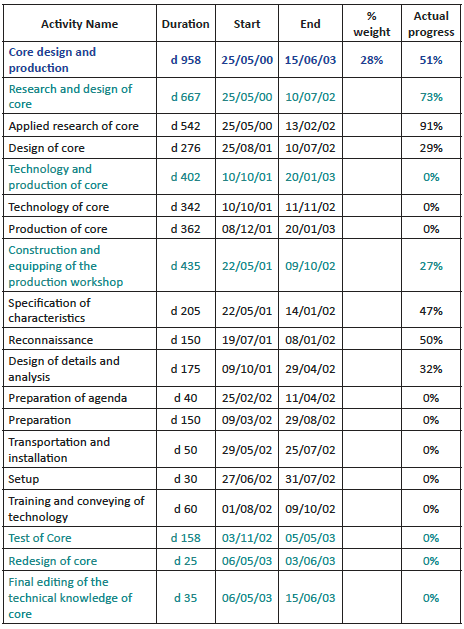
In the Amad Plan, the pathway to an implosion type warhead passed through several operational links: the design and production of the metallic core, the design of the neutron source, the construction of the shock wave system, explosive tests, diagnostic systems, and the precise measurement of pressure wave behavior. In the structure of Project 110, these same components appear as separate projects: the design and production of the source, or neutron source; the design and production of the core; and the design and production of the shock generator, or shock wave generator system.
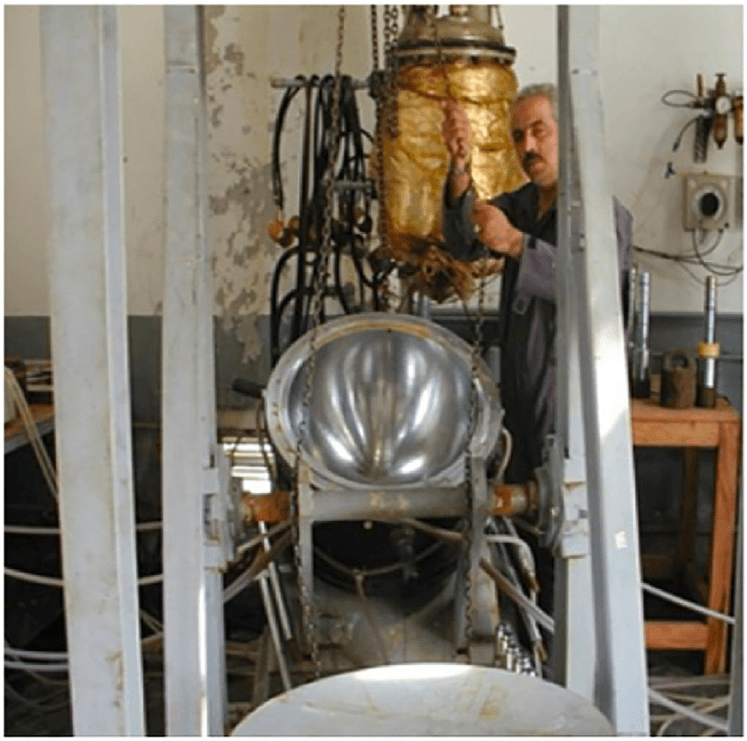
But uranium metal was not the only element at the center of this design. The neutron source, or initiator, was also one of the sensitive bottlenecks. In the Islamic Republic’s implosion design schematic, the neutron source is located at the center of the core. Given the small mass of the explosive material, deuterium gas, hydrogen with one additional neutron, was used to bring the neutron population to the threshold concentration required for nuclear fission. The cavity at the center was filled with uranium deuteride gas, and its function was to produce a small burst of neutrons to initiate the chain reaction in weapon grade uranium.

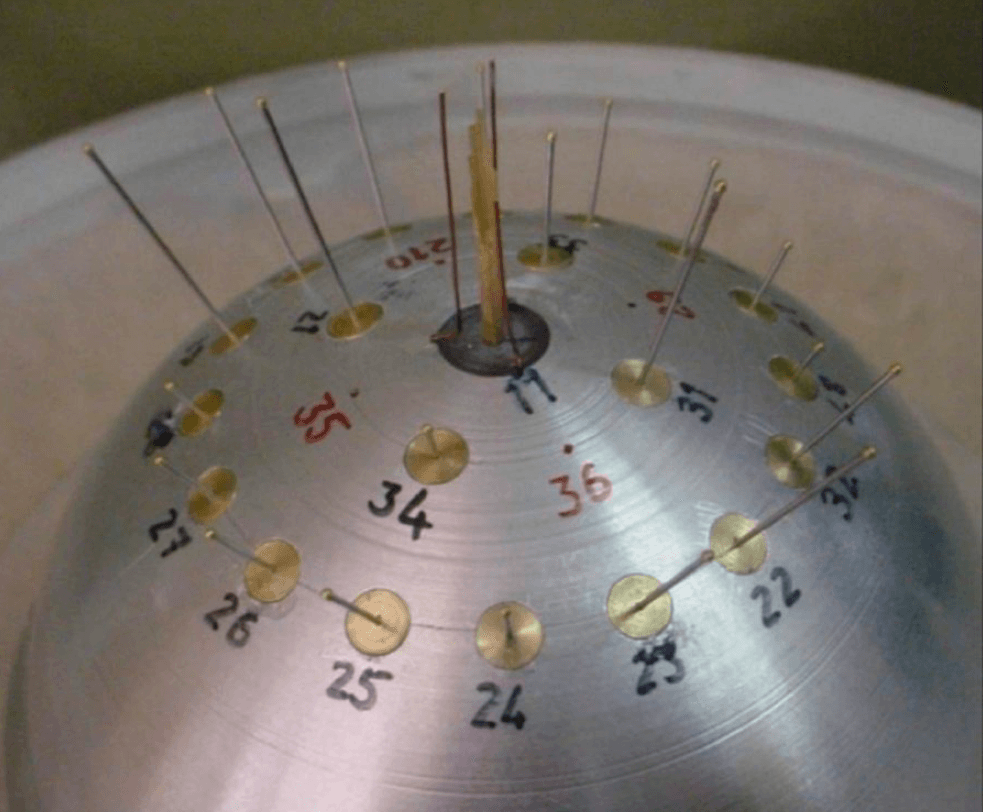
After the core and the neutron source, the issue turns to testing and measurement. In implosion design, the claim of “symmetry” cannot be proven merely by looking at the shape of a component or by drawing a static schematic. It must be measured when the blast wave reaches different points, and with what degree of uniformity. One important tool in this pathway was the pin dome, a device used in hydrodynamic tests to evaluate the behavior of an implosion system. This tool was used to measure the velocity and arrival time of the shock wave and to obtain key data on the spatial uniformity of the compression of the simulated core. Nonuniformity in the wave can result from differences in explosive density, voids, defects in the pin dome itself, or electronic failure. For this reason, multiple tests were necessary.
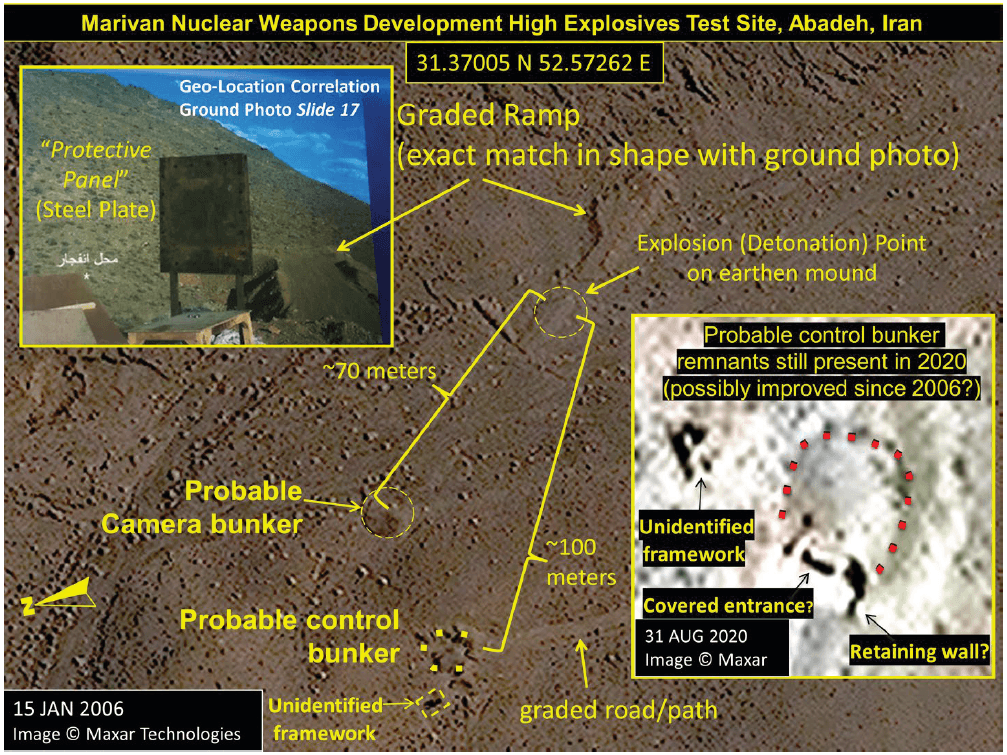
At a larger scale, the Marivan tests, in the deserts of northern Fars Province near the city of Abadeh, show that the Islamic Republic had moved toward hemispherical tests and a multipoint initiation system. In one large test in 2003, the objective was to measure the arrival time of the detonation front in a hemispherical shell. In this configuration, 50 kilograms of Composition B explosive was placed in the form of a shell inside a hemispherical shock wave generator system, and the arrival time of the detonation front was measured with hundreds of fiber optic cables. These cables were placed in a thin hemispherical shell or holder, close to the inner surface of the explosives, and transmitted the light generated by the explosion to a high speed camera.
This is the point at which fiber optics enter the heart of the “spherically symmetric implosion” file. Fiber optics here were not being used for telecommunications or ordinary applications. Their role was to record the arrival time of the detonation front at different points on the hemispherical surface. If the light produced by the arrival of the blast wave at each point is recorded at a different time, engineers can determine how uniform or asymmetric the wave’s motion has been. For this reason, diagnostic systems and high speed cameras, alongside explosives and detonators, were part of the real infrastructure of implosion design. Without these measurements, the program could not know whether it had approached “symmetry” or merely produced a powerful but asymmetric explosion.
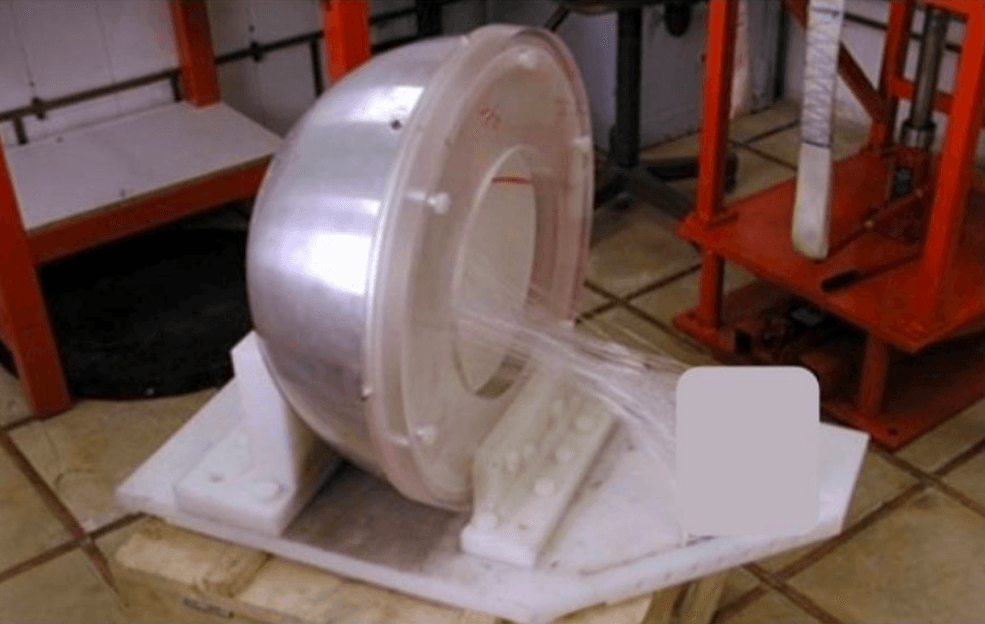
However, not all tests were necessarily the final spherical version. Some tests could be cylindrical, hemispherical, or small scale and still be important to the pathway toward the sphere. In the development of an implosion system, tests are conducted step by step: one test to examine the detonator, another to evaluate the multipoint initiation system, another to measure wave behavior, another to assess the survival of neutron detectors, and another to test a surrogate material or a smaller geometry.
The natural path of such a program leads from physical testing to computer simulation. Explosion chambers, fiber optic systems, high speed cameras, and diagnostic methods attributed to Danilenko could record wave behavior, the arrival time of the detonation front, and the degree of compression symmetry in real tests. But each real test was costly, risky, time consuming, and detectable from a security perspective. If the data obtained from these tests were accurate and sufficient, they could become the input for numerical models, allowing engineers to reconstruct thousands of different cases involving charge geometry, material density, detonator timing, core behavior, and shock wave behavior on a computer. For this reason, the file of “spherically symmetric implosion” inevitably moves from explosion chambers and high speed photography to hydrodynamic simulation software such as LS-DYNA.
Fereydoun Abbasi’s Claim About Cylindrical Symmetric Implosion
Before turning to the discussion of simulation with LS-DYNA, it is worth addressing another part of Fereydoun Abbasi’s claim. When he said in the May 25 interview that he was prepared to demonstrate a “cylindrical symmetric implosion” for critics, he was technically referring to one of the intermediate stages along the same pathway. Not all tests required to reach spherical implosion are necessarily spherical. Some tests are conducted in cylindrical or hemispherical geometries so that a program can separately measure wave behavior, detonator simultaneity, detector performance, high speed photography, fiber optics, and diagnostic systems.


Thus, the building in which cylindrical symmetric implosion tests were conducted was destroyed.
Did Fast16 Deliver Its Main Blow to the Simulation of Spherically Symmetric Implosion?
In the Amad Plan, reaching a spherical implosion wave was not possible through physical testing alone. Explosion chambers, fiber optic cables, high speed cameras, and diagnostic systems could generate data; but to refine the design, miniaturize the warhead, and test thousands of different cases involving charge geometry, material density, detonator timing, and wave behavior, the program inevitably had to move toward computer modeling. This is the point at which the Fast16 hypothesis enters: for years, was one of the most sensitive links in the Islamic Republic’s path toward controlling “spherically symmetric implosion” the target of cyber sabotage?
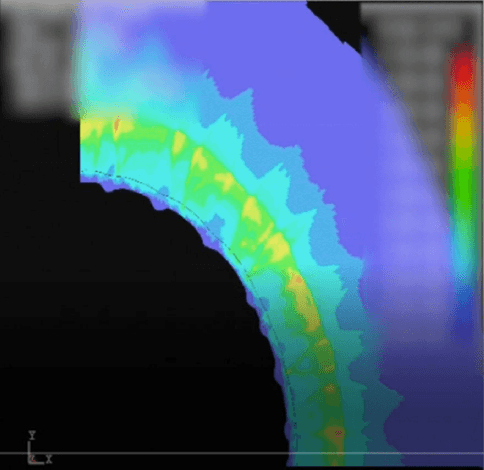
SentinelLABS described this malware as a pre Stuxnet software sabotage framework; a tool whose core components date back to 2005 and whose purpose was not overt destruction, but the covert manipulation of precise calculations. According to SentinelOne’s analysis, Fast16 could modify the code of high precision computational software in memory and generate outputs that were incorrect, but consistent and reproducible.
If such an attack reached environments such as LS-DYNA 970, its significance in the implosion file becomes clear: software of this kind can be used to simulate impact, explosion, material deformation, and wave behavior under pressure. In such a scenario, the sabotage would strike not centrifuges, but engineers’ trust in the model, the numbers, and the computational results.
In safeguards language, modeling nuclear explosive devices is one of the most sensitive areas. Therefore, if SentinelOne’s hypothesis is correct, Fast16 may have operated at a deeper level than Stuxnet; not in the production of material, but in the path toward understanding and refining the design.
There is no public, definitive document showing exactly which facility Fast16 ran in or which team it targeted. But its significance lies in the fact that, for the first time, it offers a technically explainable mechanism for sabotaging implosion simulation. From this angle, Fast16 may be the hidden link showing why “spherically symmetric implosion” became a quarter century long frustration for the Islamic Republic, despite its metallurgical, explosive, missile, and computational efforts.
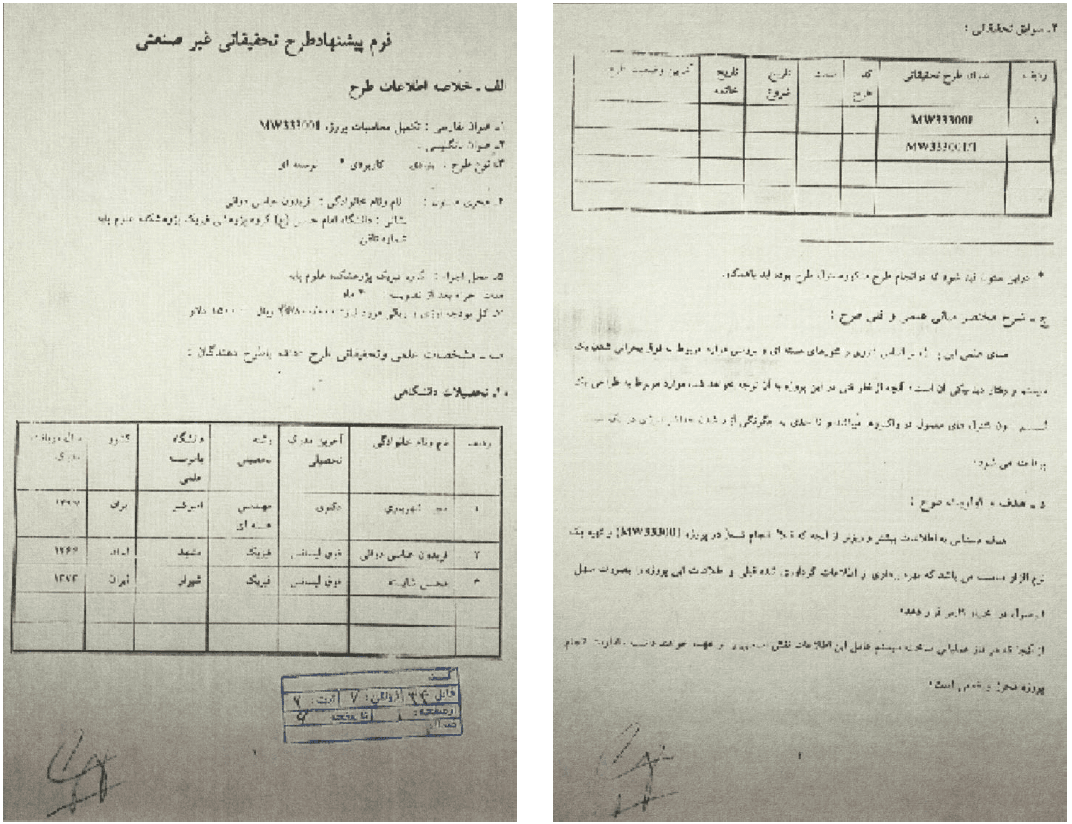
This report uses images and documents obtained from the Islamic Republic’s nuclear archive in the Shorabad warehouse, an archive that was removed from Iran in 2018 and parts of which were later published in research by the Institute for Science and International Security. The images and documents used in this report are drawn from the book Iran’s Perilous Pursuit of Nuclear Weapons, by David Albright with Sarah Burkhard and the Good ISIS Team, published in May 2021 by Institute for Science and International Security Press (Download Link).